
Why Combine Solar PV with Battery Storage?
The sun doesn’t always shine when you need power most. That’s the fundamental problem with standard solar panels—they generate electricity during daylight hours while your home’s peak energy use often happens after sunset. A battery storage system flips that equation. Instead of selling excess midday energy back to the grid for pennies per kilowatt-hour, you store it and use it during evening hours when electricity rates spike. The result is energy independence that pays for itself.
Consider the 2021 Texas winter storm, where millions lost power for days. Homes with PV-battery systems kept their lights on, refrigerators running, and furnaces heating while neighbors scrambled for generators. Beyond emergencies, battery storage also protects against utility rate hikes. With time-of-use pricing, you charge your battery during cheap off-peak hours and discharge during expensive peak periods—potentially cutting your electricity bill by 40-60%. For many homeowners, the battery becomes the bridge between clean energy generation and practical, round-the-clock consumption.
Key Components of a Home PV-Battery System
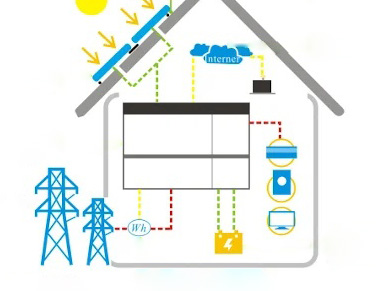
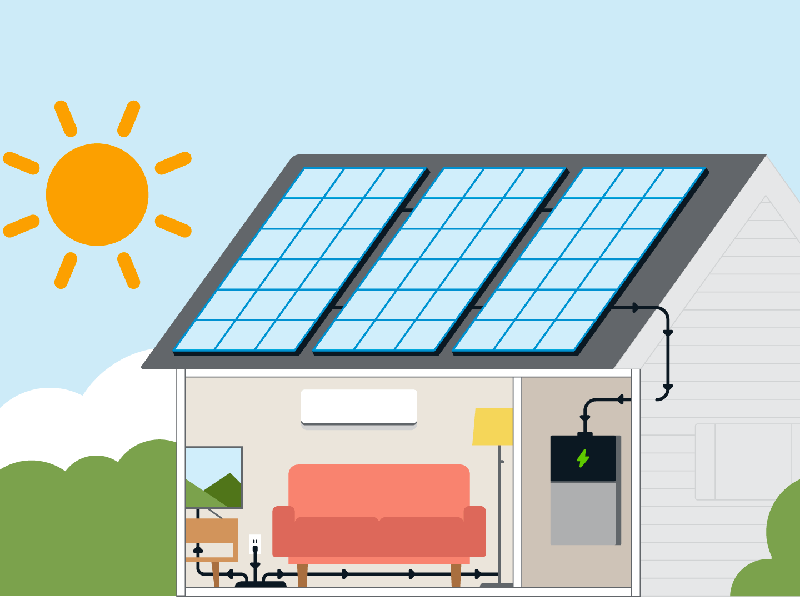
A complete system isn't just panels and a battery. It requires several interconnected parts working in harmony. The solar array captures sunlight, converting it to DC electricity. The inverter—either string, micro, or hybrid—transforms DC to usable AC power. The battery storage unit (typically lithium-ion) stores excess energy, while a battery management system monitors temperature, charge levels, and safety parameters. A smart meter tracks production and consumption in real-time, and a monitoring platform lets you control everything from your smartphone.
How to Size Your Solar and Battery System
Sizing isn't guesswork—it requires analyzing your consumption patterns. Start by reviewing 12 months of utility bills to establish your average daily usage in kilowatt-hours (kWh). A typical American home consumes about 30 kWh daily. Your solar array should produce 100-120% of that amount to account for system losses. For the battery, the rule of thumb is enough capacity to cover your overnight usage—usually 60-70% of your daily consumption if you want meaningful backup coverage. A 10 kW solar system paired with a 13.5 kWh battery (like the Tesla Powerwall) serves most homes well.
Climate matters too. Cloudy regions need larger arrays or more battery capacity to carry through multi-day low-production periods. Conversely, sunny states with net metering might justify smaller batteries since the grid acts as your backup. Use tools like PVWatts or consult with installers who run hourly simulation models—they’ll factor in shading, roof orientation, and seasonal weather patterns to right-size your system.
Costs, Savings, and Incentives
The upfront cost remains the biggest hurdle. A complete PV-battery installation ranges from $18,000 to $40,000 depending on system size, battery brand, and regional labor rates. However, the financial picture improves dramatically when you factor in incentives. The federal Investment Tax Credit (ITC) currently offers a 30% credit on the entire system cost through 2032. Many states add their own rebates—California's Self-Generation Incentive Program (SGIP) can cover up to 25% of battery costs for eligible households. Utility companies in New England and Hawaii offer time-of-use tariffs that make battery arbitrage particularly lucrative.
The payback period typically spans 6-10 years, but consider the avoided costs: no more electricity bills during peak months, protection against rate inflation (historically 2-5% annually), and increased home resale value—studies show solar-equipped homes sell for 4.1% more than comparable non-solar properties. If you finance with a solar loan, your monthly payment might equal your previous utility bill, meaning immediate cash-flow parity while building equity.