
Introduction to Solar-Powered Container Farming
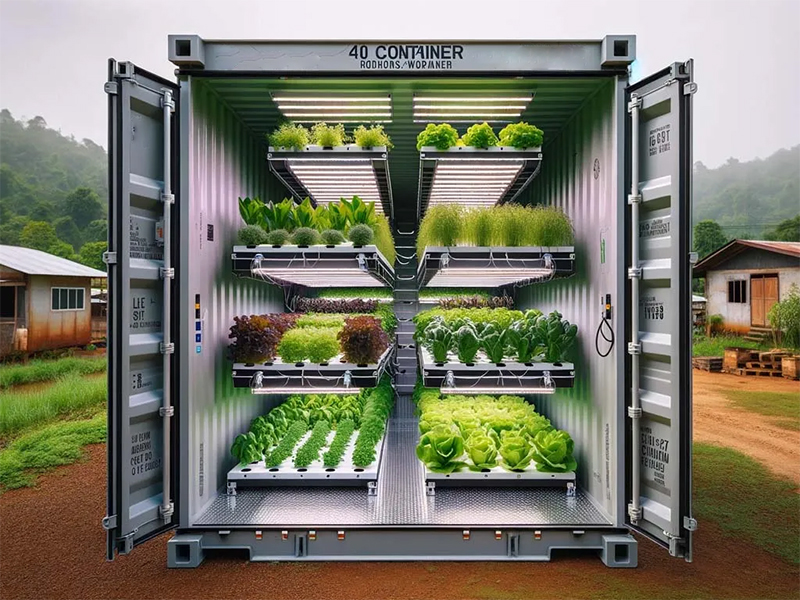
Container farming—repurposing steel shipping boxes into controlled-environment agriculture units—has emerged as a compelling response. Yet conventional containers consume substantial electricity for lighting, ventilation, and climate control, often negating their sustainability claims. Rooftop photovoltaic (PV) integration directly addresses this weakness. A 40-foot container with solar panels can achieve significant energy autonomy while producing high-value crops within 29 square meters of floor space. This convergence of modular architecture and renewable energy transforms food production from a centralized, land-dependent model into a distributed, infrastructure-light alternative.
Design and Technical Specifications of the 40ft Hydroponic System
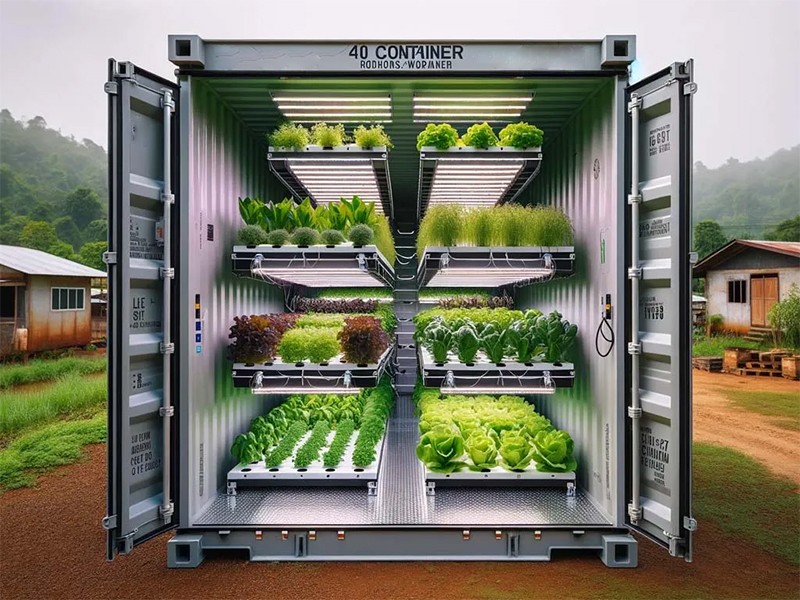
A standard 40-foot high-cube container provides approximately 29 m² of internal growing area, yet vertical racking multiplies this to 90–120 m² of cultivated surface. The hydroponic layout typically employs nutrient film technique (NFT) channels arranged in 4–6 tiers for lettuce, while mushroom cultivation occupies dedicated dark chambers with shelving units. Insulation is critical: polyurethane foam panels (80–100 mm thickness) maintain internal temperatures between 15–25°C regardless of external conditions. Climate control relies on a dual-circuit system—a heat pump for cooling and dehumidification, plus supplemental electric heaters for cold snaps. LED lighting arrays deliver 200–300 µmol/m²/s of photosynthetically active radiation, tuned to specific spectra for leafy greens versus fungal fruiting bodies. The PV array, mounted on reinforced roof brackets, typically comprises 10–14 panels generating 4–6 kWp, sufficient to offset 60–80% of operational energy demand in temperate zones.
| Parameter | Lettuce Module | Mushroom Module | Shared Systems |
|---|---|---|---|
| Temperature | 18–22°C | 14–18°C | HVAC backup |
| Humidity | 60–70% RH | 85–95% RH | Dehumidifier |
| Light intensity | 250 µmol/m²/s | 0 (darkness) | LED control |
| CO₂ enrichment | 800–1000 ppm | 500–600 ppm | Sensor network |
Energy Management and Rooftop PV Integration
Solar generation profiles rarely align perfectly with crop demand. Lettuce lighting peaks during early morning and evening hours, while mushroom cooling loads spike in midday heat. This mismatch necessitates an intelligent energy management system (EMS). During peak solar irradiance, surplus PV power can charge a 20–30 kWh lithium-ion battery bank or drive ice storage for nighttime cooling. Data from pilot installations in Southern Europe indicate that a 5 kWp rooftop array meets 72–85% of total annual energy needs, with grid draw confined to winter months. However, the economic calculus depends heavily on local electricity tariffs and feed-in policies. In regions with net metering, excess daytime generation can offset nighttime consumption at retail rates, improving payback periods to 4–6 years—versus 8–10 years without such schemes.