
Introduction to Containerized BESS
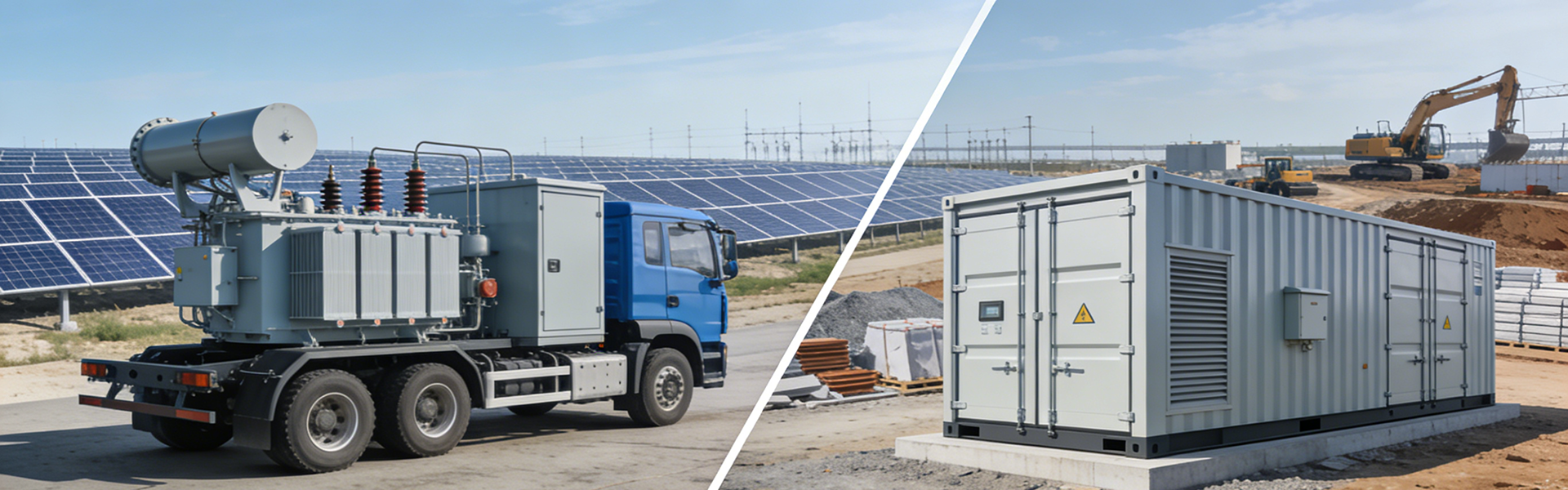
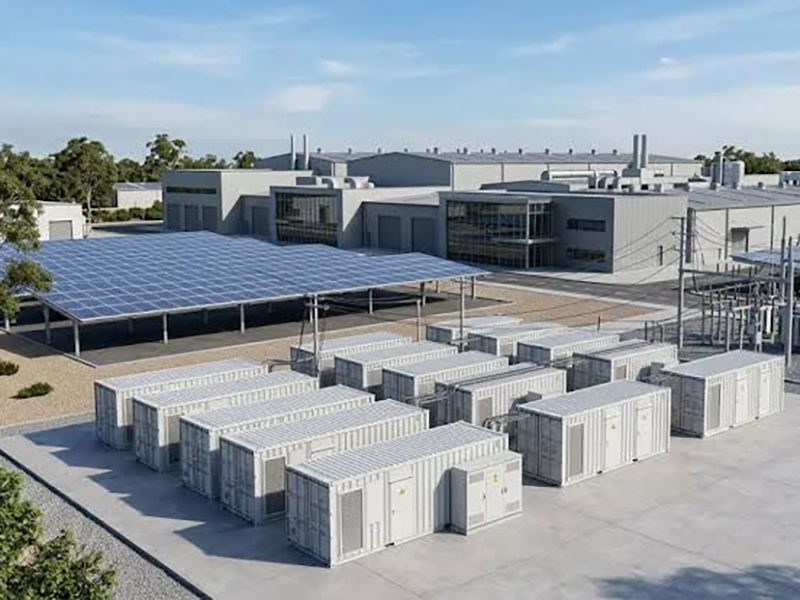
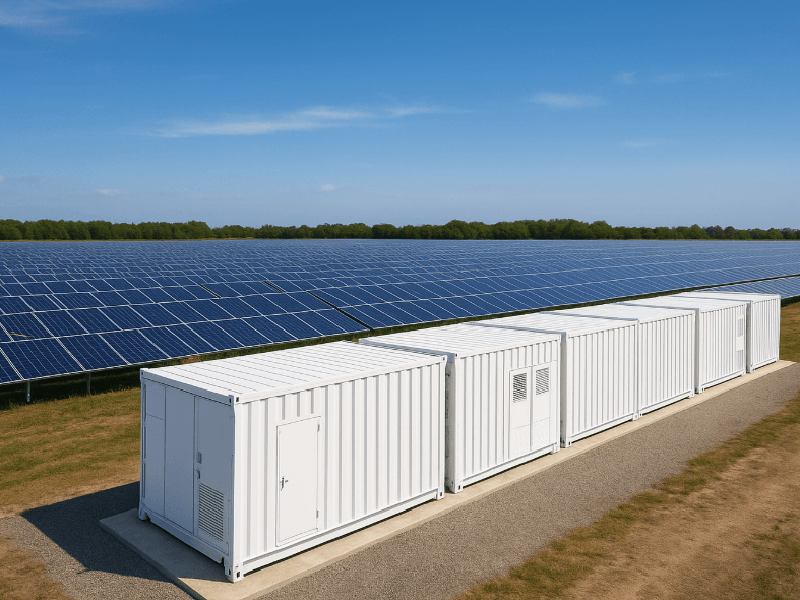
Containerized battery energy storage systems (BESS), self-contained powerhouses that are reshaping how commercial and industrial facilities manage electricity. Each container, roughly the size of a shipping container, houses thousands of lithium-ion cells, advanced inverters, and thermal management systems, all pre-assembled and tested before delivery. Instead of constructing a permanent brick-and-mortar energy storage room, businesses can deploy modular, plug-and-play units that scale with their needs.
Key Components and System Architecture
At the heart of the BESS sit battery modules, typically lithium iron phosphate (LFP) or nickel manganese cobalt (NMC) chemistries, stacked in racks that maximize energy density while allowing individual module replacement. A power conversion system (PCS) transforms direct current from the batteries into alternating current usable by the facility, and vice versa during charging. The battery management system (BMS)acts as the brain, monitoring cell voltage, temperature, and state of charge every few milliseconds. Meanwhile, a thermal management system—often liquid cooling or forced-air—keeps cells within their optimal temperature range, preventing runaway degradation. Finally, a fire suppression system and environmental control unit round out the architecture, ensuring safety and longevity. All these components communicate through a central controller that can interface with the facility's energy management system.
| Component | Typical Function | Common Technology | Redundancy Level |
|---|---|---|---|
| Battery modules | Store and release DC energy | LFP or NMC | N+1 rack |
| Power conversion system | DC-to-AC and AC-to-DC conversion | Bidirectional inverter | Dual-unit |
| Battery management system | Cell monitoring and balancing | Active balancing | Dual controllers |
| Thermal management | Temperature regulation | Liquid cooling | Dual pumps |
| Fire suppression | Detect and extinguish | Aerosol or Novec 1230 | Single zone |
Benefits for Commercial and Industrial Facilities
Applications and Use Cases
Walk through a mid-sized hospital, and you might find a containerized BESS tucked behind the emergency generator yard. There, it performs demand charge management while also providing a seamless bridge during generator startup—a gap that previously lasted 10–15 seconds.
In a cold-storage warehouse, the same technology ensures that a grid outage never spoils millions of dollars of perishable goods.
Manufacturing plants with arc furnaces or welding lines use the BESS to smooth volatile loads, avoiding penalty charges for power factor fluctuations.
Commercial office towers pair containers with rooftop solar to achieve net-zero energy goals.
While electric vehicle fleet depots rely on them to buffer fast-charging spikes that would otherwise overwhelm local transformers.
Even data centers are adopting containerized BESS as a cleaner, faster-responding alternative to diesel rotary UPS systems.