
Why Choose Stackable Residential Energy Storage Systems
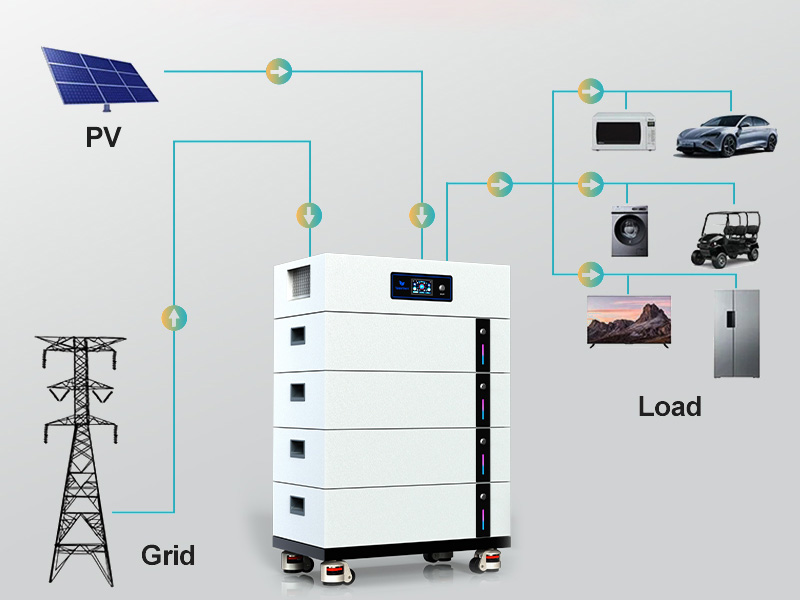
Stackable residential energy storage systems have transformed this scene from a niche luxury into an accessible reality. Unlike bulky monolithic units that demand dedicated wall space, these modular towers grow one slim module at a time, clicking together like building blocks. Each 5kWh unit weighs roughly 50 kilograms and slides into a sleek rack that occupies less than half a square meter of floor.

Scalable Capacity: From 5kWh to 40kWh for Every Home
A studio apartment running a refrigerator, Wi-Fi router, and a few LED lights might thrive on a single 5kWh module. A four-bedroom family home with an electric vehicle charger, heat pump, and home office, however, demands the full 40kWh stack—eight modules working in seamless concert. The beauty lies in the upgrade path: start with two modules during initial installation, then add capacity as needs evolve. No rewiring, no replacing the inverter, no contractor visit required. Simply slide a new module onto the existing rack, connect the busbar, and the system recognizes the addition within seconds. This granular scalability means homeowners never pay for capacity they don't yet need, while retaining the freedom to expand during a kitchen renovation or after purchasing a plug-in hybrid.
| Configuration | Modules | Usable Capacity | Typical Load Coverage | Footprint |
|---|---|---|---|---|
| Compact | 1 | 5kWh | Essential circuits, 6–8 hours | 0.3 m² |
| Standard | 4 | 20kWh | Whole-home backup, 12–16 hours | 0.6 m² |
| Extended | 6 | 30kWh | Home + EV charging, 20–24 hours | 0.9 m² |
| Maximum | 8 | 40kWh | Off-grid capable, 36+ hours | 1.2 m² |
The Advantages of Buying Directly from an OEM Factory
Factory-direct purchases eliminate middleman markups that can inflate prices by 30 to 50 percent. More importantly, you gain direct access to the engineers who designed the battery management system. Questions about cell balancing, thermal thresholds, or firmware updates receive answers from the source—not a call center script. OEM factories also offer flexible minimum order quantities, allowing small installers and regional brands to compete with national players. The relationship feels less like a transaction and more like a partnership, with dedicated account managers who understand your market's unique climate and grid conditions.
Cost Savings and ROI: Factory Direct vs. Retail
The financial picture sharpens when you compare a 20kWh stackable system purchased through traditional retail channels against one bought directly from an OEM. Retail pricing often includes three to four intermediaries, each adding 15 to 25 percent. Factory-direct pricing, by contrast, reflects raw material costs plus a modest manufacturing margin. A 20kWh system that retails for $12,000 might leave the factory at $7,200—a 40 percent reduction. For homeowners, this translates to a payback period of four to six years instead of eight to ten, assuming average utility rates and solar production. For installers, the margin allows competitive bidding without sacrificing profitability. The ROI extends beyond the initial purchase: modular design means replacing a single failed module costs $600 instead of $4,000 for an entire monolithic unit.