
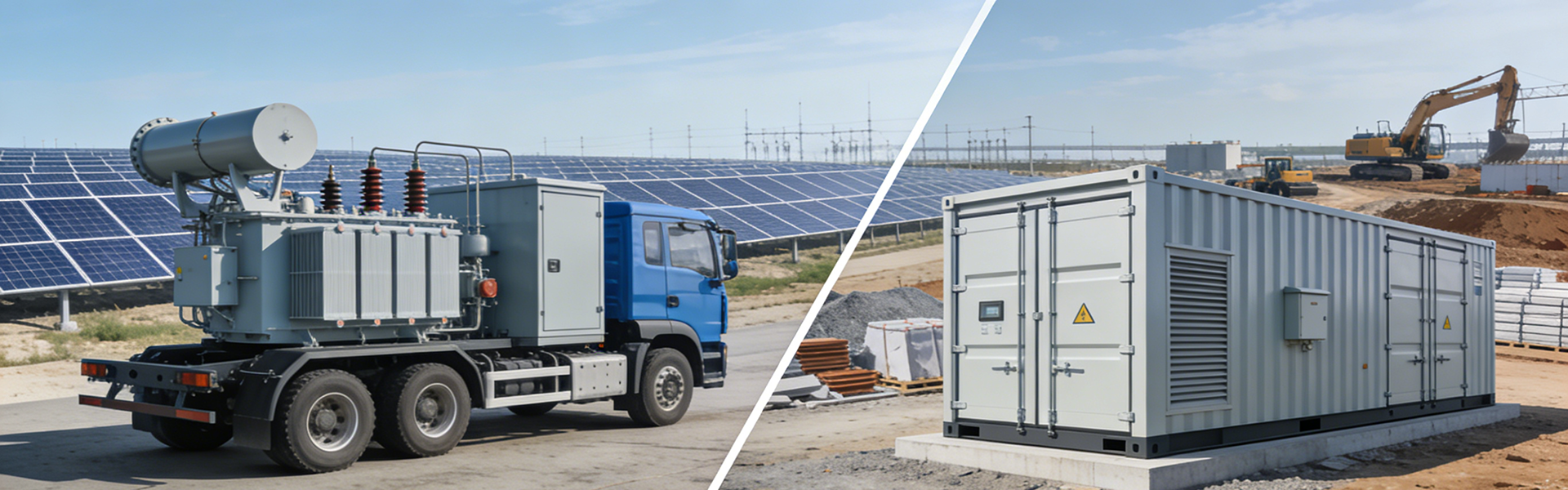
Introduction to Grid-Scale Battery Storage
Grid-scale battery storage has become a critical component of modern power infrastructure, enabling utilities to balance supply and demand, integrate renewable energy, and enhance grid stability. As renewable penetration rises—solar and wind now account for over 12% of global electricity generation—the need for flexible, fast-responding storage becomes structurally unavoidable. Grid-scale BESS is no longer a niche supplement; it is a foundational asset for decarbonized grids.
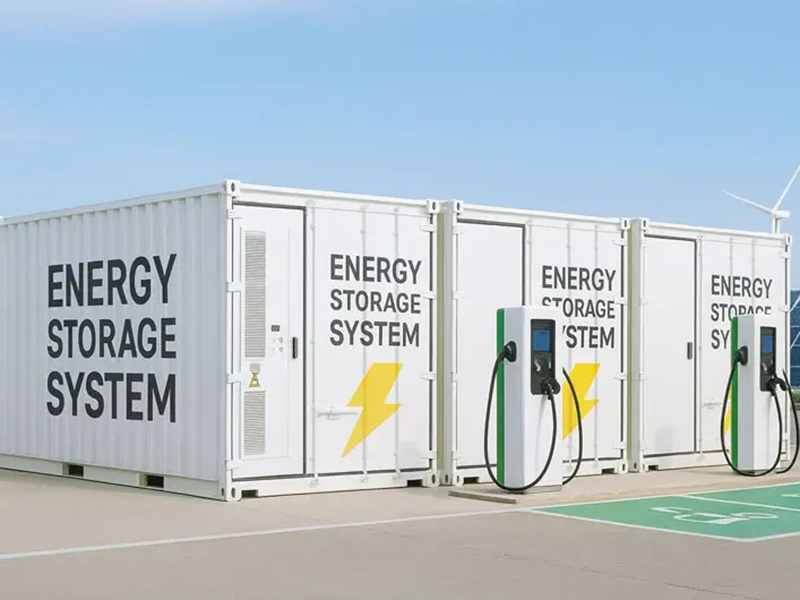
What is Containerized BESS?
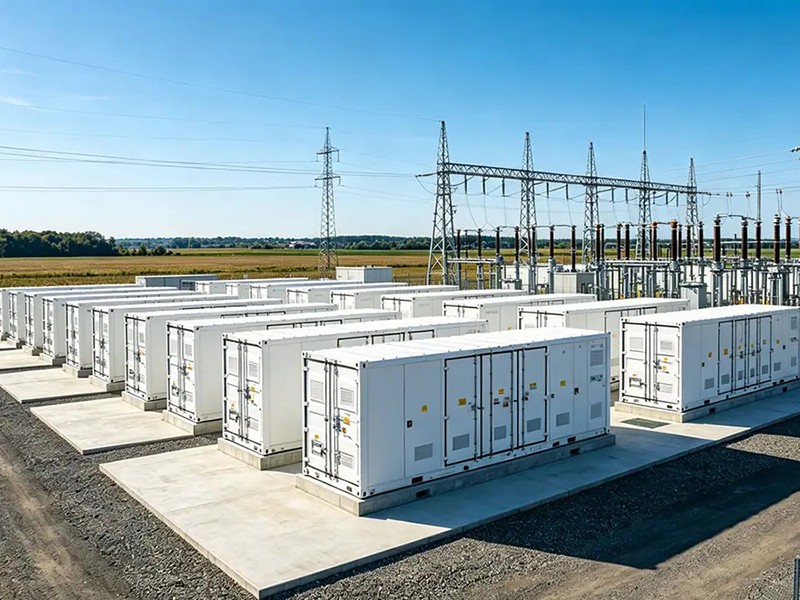
A containerized battery energy storage system (BESS) packages battery racks, power conversion systems (PCS), thermal management, and control electronics into standard shipping containers—typically 20-foot or 40-foot ISO units. This modular architecture allows pre-assembly and factory testing before shipment, significantly reducing on-site construction time. A single 40-foot container can house 3–5 MWh of usable capacity, depending on cell chemistry and configuration. Multiple containers can be paralleled to reach hundreds of MWh, making the approach inherently scalable. The container format transforms BESS from a bespoke engineering project into a manufactured product.Advantages of Containerized BESS for Grid Applications
The primary advantage lies in deployment speed: a containerized system can be commissioned in weeks rather than the 12–18 months typical of traditional brick-and-mortar installations. Cost predictability improves because factory assembly reduces labor variability and site-specific engineering. Thermal management and fire suppression are integrated and validated at the factory, addressing safety concerns that plague on-site builds. Additionally, standardized containers simplify logistics and permitting—authorities increasingly recognize ISO container certifications, accelerating approvals. From a lifecycle perspective, modular units can be swapped or upgraded independently, extending the system's useful life without full replacement.
| Parameter | Containerized BESS | Traditional BESS |
|---|---|---|
| Typical capacity per unit | 3–5 MWh | 10–50 MWh |
| Deployment time | 8–16 weeks | 12–18 months |
| Factory testing | Full system | Partial |
| Scalability | Modular, incremental | Fixed design |
| Site preparation | Minimal | Extensive |
OEM Solutions for Containerized BESS
OEMs in this space provide not just hardware but integrated design, manufacturing, and after-sales support. Leading OEMs typically offer cell-to-container solutions, sourcing cells from tier-one manufacturers and assembling racks, HVAC, and PCS under one quality management system. The OEM model shifts technical risk from the developer to the manufacturer, as performance guarantees—round-trip efficiency above 85%, cycle life exceeding 6,000 cycles—are contractually backed. Some OEMs also provide energy management software (EMS) that optimizes dispatch based on market signals. However, not all OEMs own their production lines; some act as integrators, which can introduce supply chain opacity. The depth of vertical integration is a key differentiator among OEMs.