
Why Home Battery Storage is Essential for Solar Systems
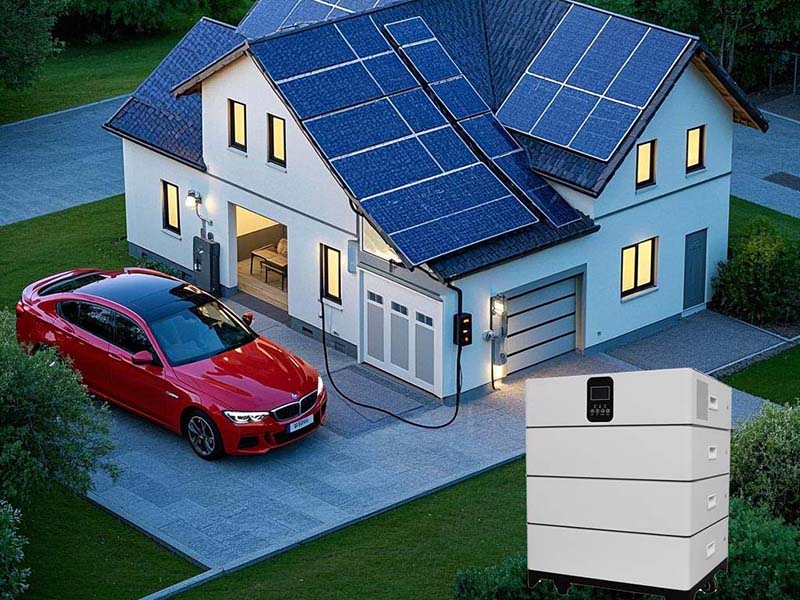
The first time the sun dipped below the ridge behind my neighbor's barn, I watched the digital meter on our wall spin backward. That was the moment I realized solar panels alone weren't enough—we were sending our hard-earned energy back to the grid for pennies while paying premium rates at night. Home battery storage changes this equation entirely. A battery system captures the surplus electricity generated during peak sunlight hours, storing it for use after dark or during grid outages. For families in regions with time-of-use electricity pricing, this stored power can slash monthly bills by 30–50%, turning the household into a self-sufficient microgrid rather than a passive consumer.
Key Factors to Consider When Choosing a Solar Battery
Choosing a battery is not merely about picking the largest capacity available. During my research, I discovered that usable capacity matters far more than raw numbers—a 13.5 kWh battery with a 90% depth of discharge offers roughly the same usable energy as a 15 kWh unit with an 80% limit. Efficiency ratings, measured in round-trip efficiency, typically range from 85% to 97%, and this directly impacts how much stored sunlight actually powers your appliances. The table below compares common residential battery specifications:
| Battery Type | Usable Capacity (kWh) | Round-Trip Efficiency | Lifespan (Cycles) | Warranty (Years) |
|---|---|---|---|---|
| Lead-Acid | 8–12 | 75–85% | 500–1,000 | 1–3 |
| Lithium-Ion | 10–16 | 90–95% | 6,000–10,000 | 10 |
| LFP (LiFePO4) | 12–20 | 92–97% | 8,000–12,000 | 10–15 |
| Flow Battery | 20–40 | 70–80% | 10,000+ | 15–20 |
The OEM Factory Direct Advantage: Quality and Cost
I remember walking through a sprawling manufacturing facility in Shenzhen, where robotic arms assembled lithium cells with surgical precision. That visit taught me the real meaning of OEM factory-direct purchasing. By eliminating intermediary distributors, homeowners can access commercial-grade components at wholesale prices—often 25–40% cheaper than retail-branded equivalents. More importantly, factory-direct suppliers provide thorough documentation of cell sourcing, strict quality control during assembly, and customizable configurations that match specific household usage patterns. A friend who installed a factory-direct system saved nearly $3,000 compared to a branded quote, and her system has operated flawlessly for three winters.
Installation, Maintenance, and Safety Best Practices
Proper installation is non-negotiable. The battery should be mounted in a cool, dry area away from direct sunlight and flammable materials, with at least 12 inches of clearance for airflow. I learned this the hard way when my first installation suffered from overheating in a cramped garage corner. Professional electricians should handle all wiring, especially where DC voltages exceed 400 volts. Routine maintenance is minimal for lithium systems—simply check the ventilation vents quarterly and monitor the app for any imbalance in cell voltages. Safety features like automatic disconnect switches and thermal run-away protection are standard on reputable units, but verify that your system includes both a battery management system (BMS) and a certified inverter with anti-islanding protection.
Future Trends and Long-Term Savings with Solar Storage
The landscape is shifting rapidly. By 2025, many utilities have begun implementing demand charges and dynamic pricing structures that make battery storage increasingly attractive. Emerging technologies like solid-state batteries promise even higher energy density and faster charging times. The long-term economics are compelling: a typical 10 kWh system installed today pays for itself in 6–9 years through avoided electricity purchases, peak-shaving savings, and potential grid-service incentives. Some homeowners in my community now participate in virtual power plant programs, earning credits by discharging their batteries during regional demand spikes. As panel efficiency improves and battery costs continue their decade-long decline—dropping over 80% since 2015—home energy independence is no longer an elite luxury. It is becoming a practical, profitable decision for the average family.