
Understanding Solar Battery Storage: Basics and Benefits
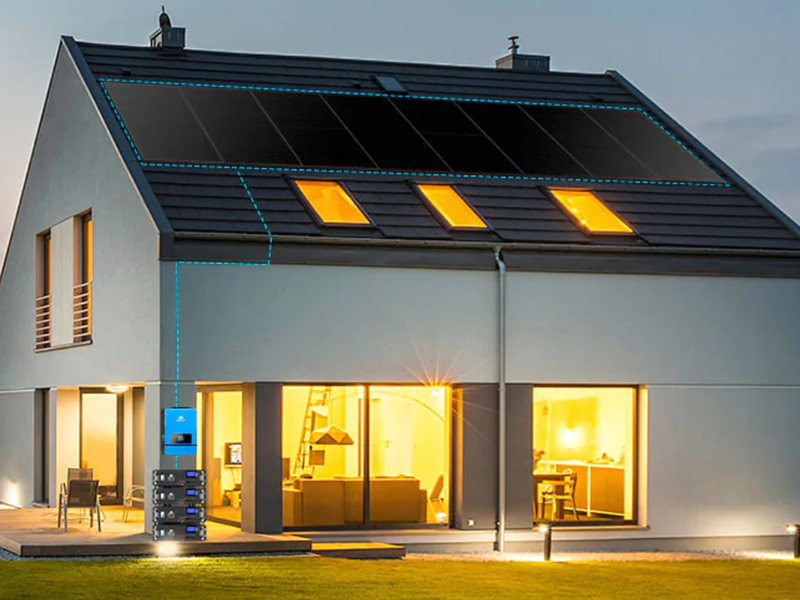
A solar battery transforms a photovoltaic array from a daytime-only energy source into a round-the-clock power station. When sunlight hits your panels, the inverter converts DC electricity into usable AC power for your home, but any surplus energy—instead of being sent back to the grid at a pittance—gets diverted into chemical storage. That stored energy becomes your personal reserve, ready to power your home after sunset, during a blackout, or on overcast mornings when panels are sluggish. The core benefit is energy independence: you stop being a passive consumer tied to utility rates and become an active manager of your own generation. Beyond resilience, batteries also enable time-of-use arbitrage—charging during cheap off-peak hours and discharging during expensive peak periods—which can shave 30-50% off electricity bills in regions with dynamic pricing. Additionally, a storage system can reduce your carbon footprint by maximizing the percentage of self-generated renewable energy you actually consume, often pushing that share from 30% without storage to over 80% with a properly sized battery.
Types of Solar Batteries: Comparing Lithium-Ion, Lead-Acid, and Flow Batteries
The chemistry inside your battery determines its lifespan, safety profile, and cost per kilowatt-hour. Lithium-ion dominates the residential market, offering a compact footprint, 90-95% round-trip efficiency, and 6,000-10,000 cycle life at 80% depth of discharge. Its thermal stability and low maintenance make it the default choice for most modern PV installations. Lead-acid remains the budget option—cheaper upfront but heavier, less efficient (70-80%), and requiring regular maintenance like water topping and equalization charges. It also degrades quickly if discharged below 50%, making it less practical for daily cycling. Flow batteries, using liquid electrolytes in external tanks, provide unlimited cycle life and deep-discharge capability, but their large physical footprint and high initial cost (often $800-$1,200 per kWh) restrict them to commercial or off-grid applications. The table below summarizes key trade-offs:
| Battery Type | Efficiency | Cycle Life | Cost per kWh | Best Use Case |
|---|---|---|---|---|
| Lithium-Ion | 90-95% | 6,000-10,000 | $500-$800 | Residential daily cycling |
| Lead-Acid | 70-80% | 500-1,000 | $150-$300 | Backup, rare cycling |
| Flow | 75-85% | 20,000+ | $800-$1,200 | Commercial, long-duration |
Sizing and Selecting the Right Battery System for Your PV Setup
Sizing a battery is less about panel wattage and more about your consumption patterns and goals. Start by calculating your daily energy usage—review your utility bills for the highest-month average, then subtract the portion your panels already cover. If your goal is full off-grid independence, you need three to five days of autonomy, meaning a 10 kWh daily load requires a 30-50 kWh battery bank. For grid-tie backup, one to two days of capacity (10-20 kWh for a typical home) suffices to ride through outages. Next, consider depth of discharge (DoD) —lithium batteries tolerate 80-90% DoD, while lead-acid should stay above 50%. That means a 10 kWh lithium battery delivers 8-9 kWh usable, whereas a lead-acid unit of the same nominal size yields only 5 kWh. Finally, factor in power rating (kW) —the battery must handle your peak surge loads like air conditioners or well pumps. A 5 kW continuous output with 7 kW surge capacity is adequate for most households, but large appliances may require parallel battery modules.
Installation, Maintenance, and Safety Considerations
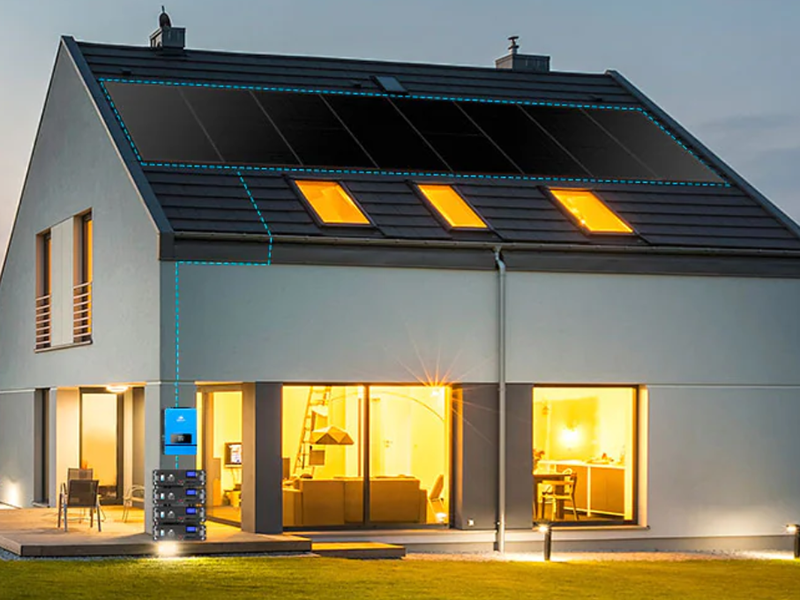
Professional installation is strongly recommended, as batteries involve high-voltage DC wiring, thermal management, and proper grounding. The unit should be mounted on a non-combustible surface in a cool, ventilated area—garages or utility rooms work well—while avoiding direct sunlight or freezing temperatures. Clearance requirements typically demand at least 3 feet of space around the enclosure for airflow and service access. Maintenance varies by chemistry: lithium systems are essentially zero-maintenance, with internal BMS handling cell balancing and temperature monitoring, while lead-acid requires monthly electrolyte checks and terminal cleaning. Safety protocols include proper torque on all connections (loose lugs cause resistive heating), GFCI protection on the AC side, and arc-fault circuit interrupters to prevent fire hazards. Always verify that your inverter and battery communicate properly—mismatched protocols can lead to overcharging or premature shutdowns.