
Why OEM Factory Direct Pricing Matters for Homeowners
The residential energy storage market has experienced explosive growth, with global installations projected to exceed 45 GWh by 2025. Yet, the single largest barrier to adoption remains upfront cost. OEM factory direct pricing eliminates multiple layers of intermediaries—distributors, regional wholesalers, and retail markup—which typically add 30–50% to the final price. For a typical 10 kWh lithium-iron-phosphate (LFP) system, this translates to savings of $2,000 to $4,500 per installation. Homeowners who purchase directly from manufacturers gain access to wholesale economics without sacrificing product quality, making solar-plus-storage systems financially viable for a broader demographic.
Beyond sticker price, direct purchasing establishes a direct line of accountability. When homeowners buy from an OEM, they engage with the entity that designs, tests, and warranties the product. This reduces the risk of warranty disputes and ensures firmware updates and technical support come from the source, not a third-party reseller with limited knowledge.
Key Components and Technology in Residential Battery Systems
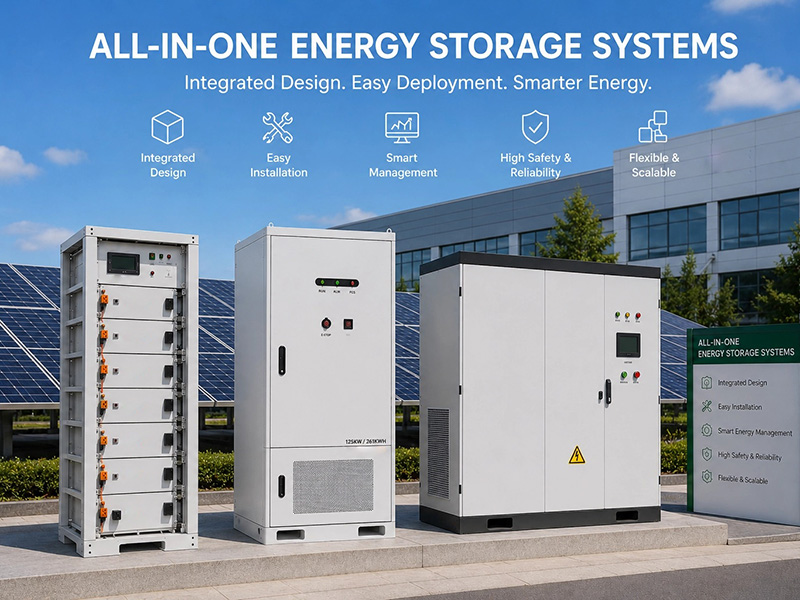
Modern residential battery systems are far more sophisticated than simple lead-acid backups. The core components include the battery cells, a battery management system (BMS), a power conversion system (PCS), and thermal management hardware. LFP chemistry dominates the sector, offering 4,000–6,000 cycles at 80% depth of discharge, compared to roughly 2,000 cycles for older NMC chemistries. The BMS performs real-time cell balancing, temperature monitoring, and state-of-charge estimation, directly impacting system longevity and safety.
Comparing OEM Direct vs. Retail Pricing: Cost and Value Analysis
To illustrate the financial differential, consider a standardized 13.5 kWh system with a 5 kW inverter.
| Cost Component | OEM Direct Price | Retail Channel Price | Difference |
|---|---|---|---|
| Hardware (battery + inverter) | $6,800 | $9,500 | +$2,700 |
| Shipping & handling | $300 | $500 | +$200 |
| Installation software license | $150 | $400 | +$250 |
| Standard warranty (10 years) | Included | $600 upgrade | +$600 |
| Total upfront cost | $7,250 | $11,000 | +$3,750 |
The retail channel’s price premium stems from inventory holding costs, sales commissions, and regional marketing expenses. However, value extends beyond the purchase price. OEM direct buyers often receive priority firmware updates and lower-cost replacement modules. Retail buyers may benefit from bundled installation services, though this often adds another $2,000–$3,000. When factoring a 15-year system lifespan, the OEM direct route yields a levelized storage cost of $0.11 per kWh, versus $0.17 per kWh through retail—a 35% reduction in lifetime cost.
How to Choose the Right OEM Partner for Your Home Storage Needs
Selecting an OEM requires evaluating technical certifications, financial stability, and after-sales infrastructure. Verify UL 9540A certification for fire safety and IEC 62619 for cell-level reliability. A manufacturer with 10+ years of R&D history and a publicly listed parent company offers stronger bankruptcy protection than a startup. Check whether the OEM provides local service partners—even in a direct model, installation often requires certified electricians.
Request a detailed datasheet covering thermal operating range, round-trip efficiency (aim for above 92%), and peak power capability. Prioritize OEMs that offer modular expansion and backward-compatible firmware, as battery technology evolves every 18 months. Finally, review the warranty’s fine print: a robust 10-year, 70% capacity retention guarantee is an industry benchmark, but the claim process should require no more than two proof-of-purchase documents.
Future Trends in Residential Battery Storage and Direct Sales Models
The next decade will witness a dramatic shift toward vertically integrated energy services. OEMs are increasingly bundling batteries with smart home energy management systems, allowing homeowners to arbitrage time-of-use rates automatically. Direct-to-consumer platforms will enable parametric customization—choosing cell chemistry, inverter sizing, and even aesthetic casing—at near-factory cost. Additionally, second-life battery programs will emerge, where OEMs repurchase degraded residential units for grid-scale storage, reducing total cost of ownership by an estimated 20%.