Reasons for Installing a Battery Storage System
Let’s explore why you might want to add battery storage to your solar PV system. First, note that a grid-tied solar system functions perfectly well without battery storage. When your system generates more electricity than you actually need—such as on a sunny day while you are away from home—the excess power is fed into the utility grid for use by others. In Massachusetts, the utility company pays you the same rate for this exported electricity as the rate you pay when purchasing electricity from the grid. Consequently, your financial return remains the same whether or not you store electricity at home.
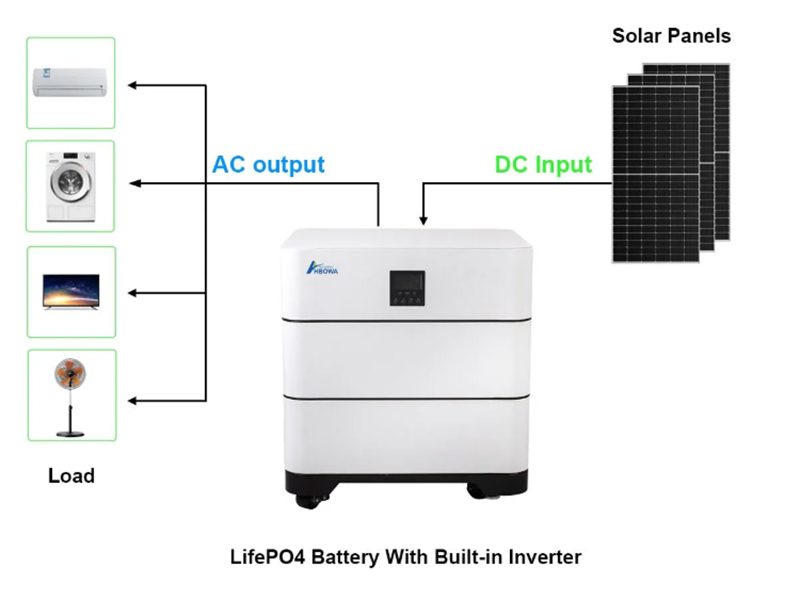
The primary reason to install a battery storage system in Massachusetts is to maintain power to your home during an outage. (Note that battery storage can be added to solar systems using either central inverters or microinverters.) Even if there is plenty of sunlight during an outage, your solar system cannot power your home without a battery storage system.
A second advantage of installing a storage system is the ability to earn money by allowing a utility company (such as Eversource) to access the energy stored in your battery during times of surging grid demand—such as a hot summer afternoon or a cold winter day. This interaction is known as "demand response." It requires no manual effort on your part; it operates via an internet connection that allows Eversource to communicate with your battery storage controller. Demand response enables Eversource to utilize distributed storage resources (like batteries) in homes and businesses to meet occasional peak electricity demands. This reduces the need to build expensive power plants and avoids the use of costly, often highly polluting backup power sources during peak periods—sources that are typically reserved as a last resort.
If you choose to participate in this program, you could earn approximately $1,000 annually, depending on the capacity of your battery storage system. Eversource will not initiate demand response requests when the weather forecast predicts severe weather, as you may need to reserve your stored energy for a potential power outage in such situations. Battery System Costs
The cost of a battery energy storage system can be high, depending on the required storage capacity. Installation costs typically range from $1,000 to $1,500 per kilowatt-hour (kWh) of storage capacity. To maintain power for critical 110V household loads (such as lighting, refrigerators, televisions, computers, and heating equipment) for 24 hours, a storage capacity of approximately 10 to 15 kWh is usually required, costing between $15,000 and $25,000.
Battery Life
Batteries typically come with a 10-year warranty, though specific terms vary by manufacturer. As the battery ages, the capacity of the battery pack generally declines gradually (for example, storage capacity might drop to 70% of its initial level after 10 years).
Battery System Installation Location
Battery units should be installed indoors (such as in a basement, utility room, or an attached garage). Outdoor installation is not recommended unless there is no other option; in our local climate, extreme heat and cold can cause capacity loss and potentially shorten the battery's lifespan. The space required for installation varies by manufacturer; for instance, a single 13 kWh Tesla module measures 4 feet high, 3 feet wide, and 6 inches deep. Depending on the size of your home and the electrical loads you wish to back up, you might need to install two modules. In this scenario, the second module is placed in front of the first, resulting in a total depth of approximately 12 inches. These modules are very heavy and are typically mounted against a wall on a solid floor. Current fire codes require fire-resistant enclosures for batteries installed in certain locations; be sure to discuss this requirement with your contractor.
Purchasing a Battery System
When purchasing a solar energy system, be sure to request a cost-benefit analysis for adding battery storage. You may find that, when considering convenience, reliability, and net cost, adding a battery storage system is a clear and wise choice.