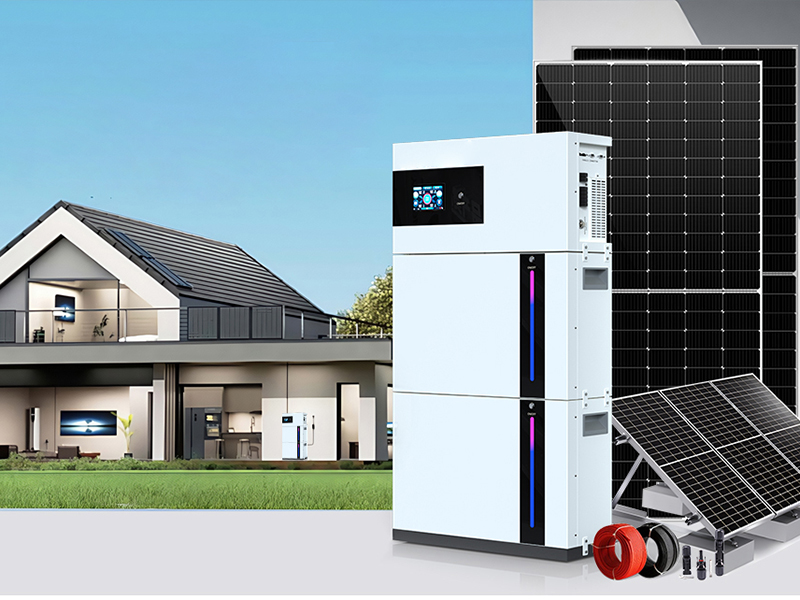
When people begin exploring solar energy, one of the first questions they often ask is: "How many solar panels does my home need to meet its electricity demands?" There is no single "one-size-fits-all" answer to this question. The specific answer depends on your electricity consumption, the type of panels you choose, your geographic location, and your specific goals for installing a solar system.
Next, let us walk you through the calculation process step-by-step, providing concrete examples that you can use as a reference to perform the calculation yourself, using your own electricity bill.
Step 1: Determine Your Electricity Consumption
Your electricity bill is the best source for this information. Look for the figure on your bill that displays your monthly electricity usage, measured in "kilowatt-hours" (kWh). This value accurately reflects the total amount of electrical energy your household consumed during the billing cycle.
Step 2: Understand the Power Output of a Single Panel
Currently, the rated power output of most residential solar panels ranges from 350 to 450 watts. While wattage provides some indication, the true measure lies in this: how much actual electricity can a specific panel generate at your particular geographic location?
This depends on "peak sun hours"—that is, the duration of intense sunlight that strikes the panels each day.
Step 3: Perform the Calculations
Now that you know your household's daily electricity consumption and understand the power-generating capacity of a single panel, it is time to combine these figures and perform the necessary calculations.
This means that if you live in a sun-rich region that receives 5 peak sun hours per day, you would need approximately 15 solar panels to meet a monthly electricity demand of 900 kilowatt-hours.
If you reside in a region with fewer sun hours—for instance, only 4 hours per day instead of 5—then that same household would require nearly 19 panels to satisfy the identical electricity demand.
Step 4: Adjust Based on Your Goals
Not everyone seeks the same level of solar coverage. Once you have determined how many solar panels are required to meet 100% of your electricity needs, you can scale the system up or down accordingly, based on your specific priorities:
Partial Coverage (50%–75%)
Effectively reduce your electricity bills without the need to install a large number of panels. This is an excellent option if you have limited roof space or wish to minimize upfront investment costs.
100% Offset
This is the most common goal. The total electricity generated by your panels over the course of a year roughly equals your total annual consumption, allowing you to virtually eliminate your electricity bills (aside from a small fixed service charge).
Oversized System
Some individuals install additional generation capacity to plan for future needs—such as charging an electric vehicle, adding a hot tub, or creating a buffer to account for the gradual decline in panel performance over time.
Step 5: Assessing Roof Space and Panel Efficiency
Roof Size and Orientation
A roof that is too small or obstructed by shading may limit the number of solar panels that can be installed. South-facing roofs capture the most sunlight; however, east- or west-facing roofs can still achieve excellent power generation results, provided the system size is appropriately adjusted.
Panel Efficiency and Wattage
The type of solar panels you choose is also crucial. High-efficiency panels can generate more electricity within the same surface area—a distinct advantage for homeowners with limited roof space. A panel's "wattage" (power output) indicates the electricity-generating capacity of a single unit. For instance, to achieve the same total electricity output, a system built with 450-watt panels would require fewer panels than a system built with 350-watt panels.
Practical Tips
If you have ample roof space, standard-efficiency panels are often the most cost-effective choice. However, if space is limited—or if you wish to maximize your electricity generation—opting for high-efficiency or high-wattage panels will help you extract the maximum amount of energy from a smaller footprint.